
5 hr
Las Catalinas Islands Two-Tank Dive
Explore Costa Rica's premier dive sites with encounters ranging from mantas to reef sharks
Reserve
Hand-picked by our editors — only the best 5 dive experiences from 12 reviewed.
Verified partners for every tour, free cancellation where available, and instant confirmation on every booking.
5 hr
Explore Costa Rica's premier dive sites with encounters ranging from mantas to reef sharks
Reserve
5 hr
Explore vibrant underwater sites teeming with rays, reef sharks, and tropical fish in Costa Rica's Pacific
Reserve
5 hr
First-time dive experience at Costa Rica's stunning archipelago with PADI-certified instructors
ReservePrices from verified partners. Availability updates in real time at checkout. Free cancellation policies apply where shown.
The landmarks, rooms, and views travelers on this tour remember — all visible on a single visit.
A submerged volcanic crater known for large schooling fish and manta rays.
A vertical rock wall descending into deep water teeming with colorful sponges.
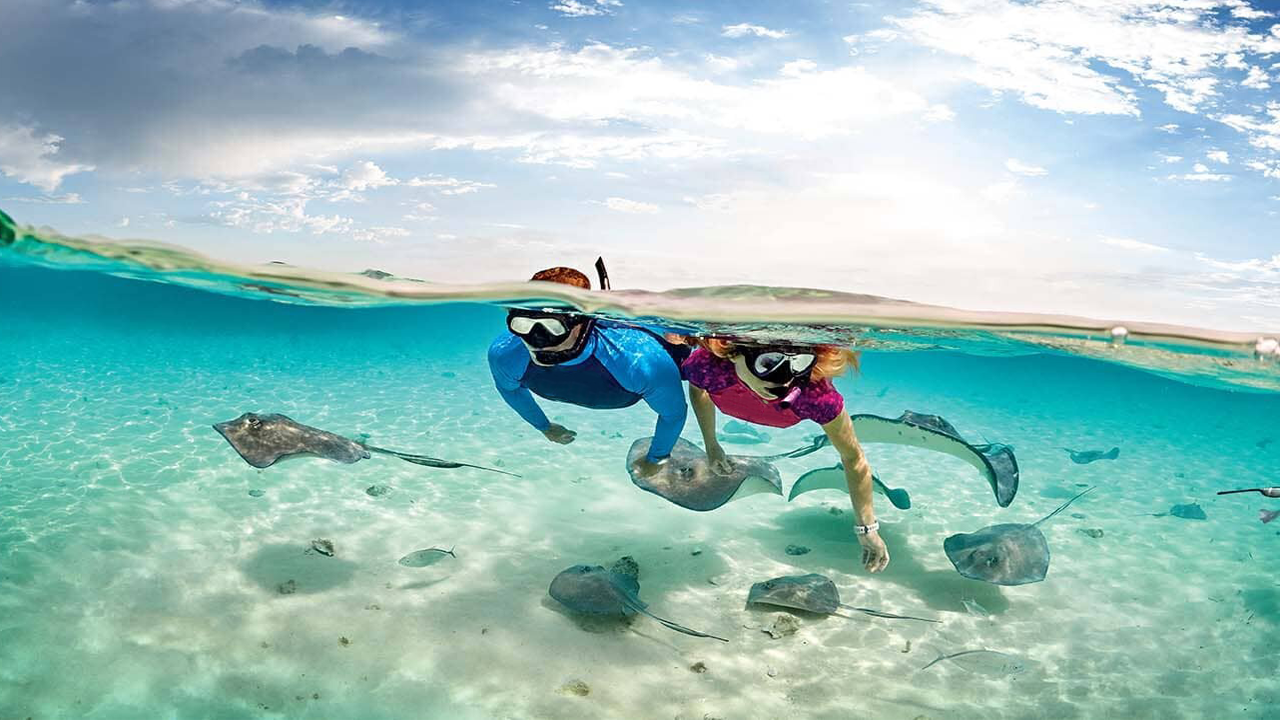
Famous for sightings of eagle rays and white-tip reef sharks.
Underwater spires that serve as a habitat for diverse marine species.
A protected area frequently visited by green and hawksbill sea turtles.
Las Catalinas Diving offers a high-energy, pelagic-focused experience, whereas the Papagayo Gulf provides calmer waters ideal for relaxed reef observation; many divers prefer the former for adrenaline and the latter for comfort.
| Feature | Top pick Las Catalinas Islands | Papagayo Gulf |
|---|---|---|
Marine Life |
Large pelagics and rays | Reef fish and macro life |
Current Strength |
Moderate to strong | Light to moderate |
Dive Site Type |
Volcanic rock formations | Protected coral reef structures |
Visibility |
15 to 60 feet | 20 to 50 feet |
Experience Level Required |
Intermediate to advanced | Beginner to intermediate |
Topography |
Submerged pinnacles and walls | Shallow coral gardens and bays |
| See tickets → |
Verdict: Choose the las catalinas diving tours for challenging open-ocean encounters, or opt for the Papagayo Gulf if you prefer gentle conditions and diverse reef biodiversity when booking your las catalinas diving tickets.
Choose your ticket, select your date, and reserve in under two minutes. Secure checkout handled by our verified partner.
Instant confirmation by email, with a mobile voucher you can save offline. No printing, no queuing at a collection desk.
Arrive at the entrance, show your voucher on your phone, and walk in. Most tickets include priority or skip-the-line access.
Practical details for your visit straight from our verified partners — hours, access, rules, and how to get there.
Las Catalinas, Guanacaste
Primary boat departure point
Park at designated Las Catalinas visitor areas and walk to the beach
Private transfers are the primary mode for las catalinas diving
Wear swimwear and light, breathable clothing suitable for tropical maritime climates. A rash guard or light cover-up is recommended for sun protection during las catalinas diving tours.
Use waterproof dry bags to protect personal belongings from ocean spray. Space on boats for las catalinas diving is limited, so pack light.
Underwater cameras are encouraged to capture the marine biodiversity. Secure all gear with wrist straps while engaging in las catalinas diving.
Access to boats requires climbing a short ladder or stepping from a dock. Those with limited mobility should verify boat specifications before booking las catalinas diving tickets.
Mobile signal is limited once you leave the shore. Protect devices in waterproof housings during your las catalinas diving trip.
Children must be accompanied by an adult at all times. Junior certification programs are available for younger guests interested in a las catalinas diving tour.
Carry reusable water bottles to stay hydrated. Light snacks may be provided on some las catalinas diving excursions, but verify with your specific operator.
Pets are not permitted on board vessels for safety and conservation reasons. Please arrange local care for animals while enjoying las catalinas diving.
Listen carefully to the dive master's briefing regarding safety protocols. Respect all marine life and coral formations during your las catalinas diving experience.
Best time to go, insider tips, nearby landmarks, and the cancellation fine print — flip through to skim what matters to you.
How crowds, weather, and events shift across the year.
Dry weather with clear skies and calm waters ideal for diving.
Warmest temperatures and high marine activity near the islands.
Fewer crowds allow for a more personalized las catalinas diving tour experience.
Excellent visibility as water currents shift around the islands.
Small details that turn a good visit into a great one.
Always verify ocean conditions with your operator before starting a las catalinas diving excursion.
Arriving at 07:30 allows you to secure the best equipment and avoid mid-day winds.
Watch for eagle rays and reef sharks which are frequently spotted in this area.
Re-apply reef-safe sunscreen frequently as the tropical sun is intense at sea.
Ensure you are comfortable with your buoyancy control before exploring deeper sections.
Non-bookable sights within a short walk — free to visit, easy to pair.
A quiet bay with calm waters perfect for pre-dive relaxation.
Coastal hiking trails offering elevated views of the Pacific.
A secluded cove accessible via walking paths from the main village.
Flexible, no hidden fees.
Full refunds are typically provided for cancellations made at least 24 hours prior to departure. The 0 USD entrance fee does not apply to paid las catalinas diving tours.
Hand-picked options within walking distance — pick a district for vibe, or a specific hotel for convenience.
Sophisticated hotel located in the heart of the town.
Adults-only retreat with panoramic ocean views.
Collection of villas and apartments for flexible stays.
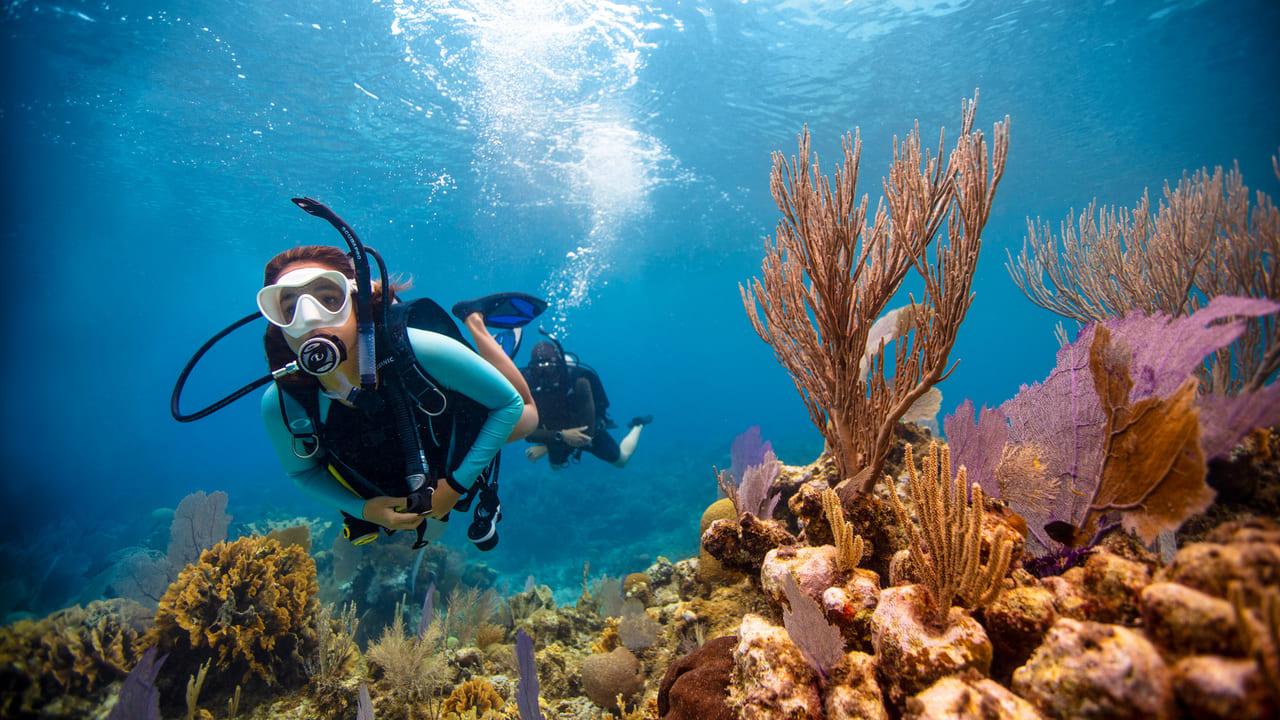
The Las Catalinas Islands rise as a cluster of volcanic pinnacles eight kilometers off the Guanacaste coast, their submerged walls descending forty meters into the Pacific. First charted by Spanish explorers in the sixteenth century, the archipelago remained a navigational hazard until Costa Rican conservationists began documenting its marine biodiversity in the 1980s. Today the site anchors a protected corridor where nutrient-rich upwellings sustain one of Central America's densest concentrations of pelagic species. Las Catalinas diving draws advanced and novice divers alike to a landscape shaped by tectonic uplift and millennia of wave erosion. The islands' western flanks shelter vertical rock faces encrusted with orange cup corals and black sea fans, while the eastern channels funnel currents that attract manta rays, bull sharks, and seasonal aggregations of spotted eagle rays. Visibility averages fifteen to twenty-five meters during the dry season, though thermoclines between twelve and eighteen meters can reduce it sharply. Water temperature holds steady at twenty-six to twenty-eight degrees Celsius year-round, and surge is moderate except during afternoon wind cycles. Operators based in Playa Flamingo and Playa Hermosa service the site exclusively via morning departures, timing arrivals to coincide with slack tide and peak marine activity. Two-tank profiles typically begin at Punta Gorda, a sloping reef at eighteen meters where whitetip reef sharks rest in sandy pockets, then proceed to Big Catalina's north wall, a drift dive past cleaning stations frequented by green sea turtles and Pacific trumpetfish. Discover Scuba programs confine participants to the shallower southern ledges, where elkhorn coral fragments and schools of blue-and-gold snappers provide a controlled introduction to open-water conditions. The islands lie within the Área de Conservación Guanacaste, a UNESCO World Heritage site that extends from the continental shelf to the cloud forests of Rincón de la Vieja. No permanent structures exist on the rocks themselves, and anchoring is prohibited within fifty meters of the shore. Dive charters operate under permits issued by the Sistema Nacional de Áreas de Conservación, which limits daily visits to preserve benthic health and minimize disturbance to nesting seabirds on the summit crags.
"Nutrient-rich upwellings sustain one of Central America's densest concentrations of pelagic species."
A step-by-step walkthrough of the visit — what you'll see, how long each stage takes, and the details that matter.
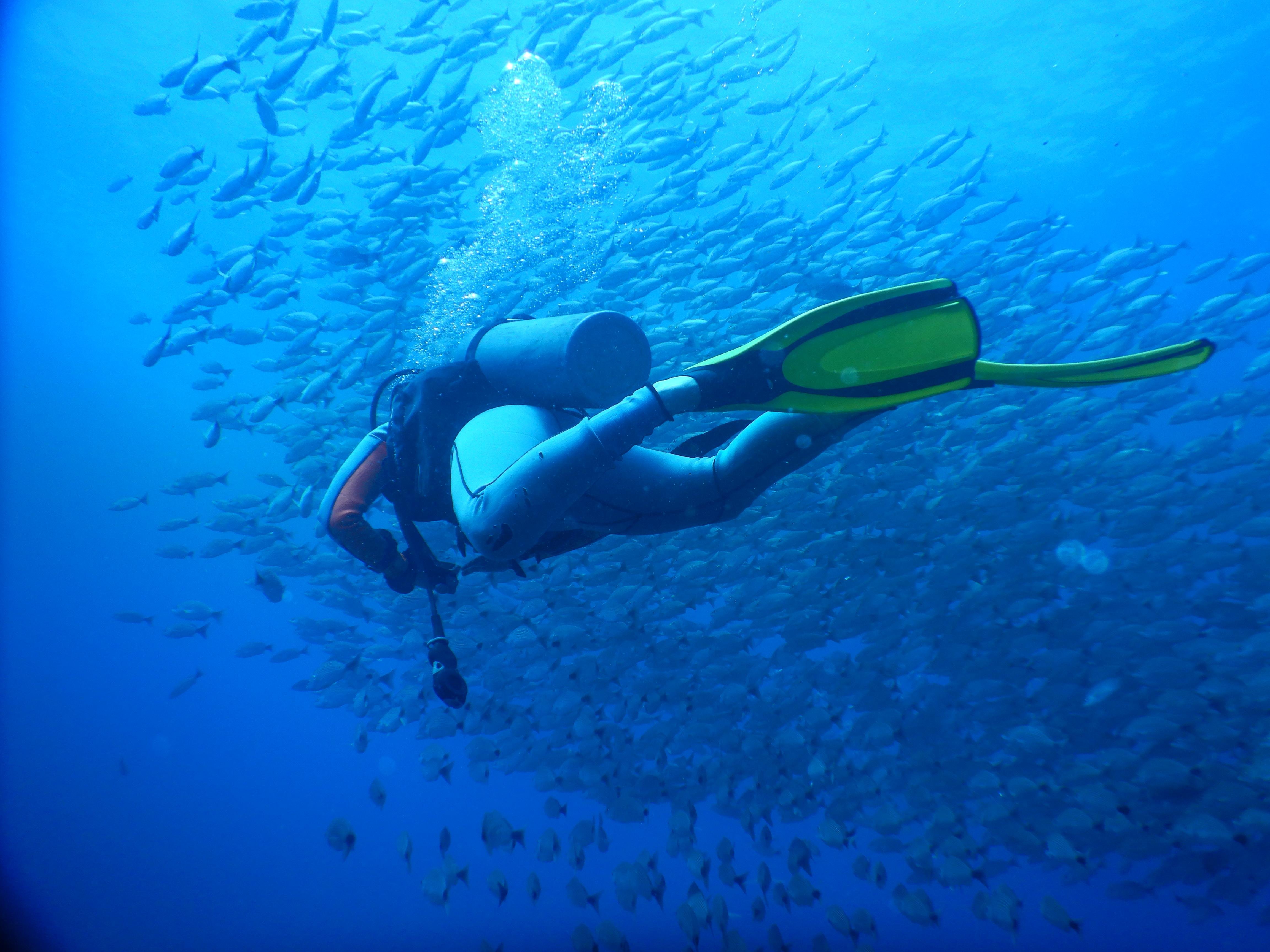
You board the dive tender at Flamingo Marina at seven-thirty, the hull cutting northwest across Bahía Potrero as the crew assembles regulators and briefs the group on current direction. Thirty minutes offshore the islands emerge as jagged silhouettes, guano-stained and ringed by breaking swells. You don your wetsuit on the swim platform, check your gauges, and roll backward into water the color of malachite. The descent line leads you past a thermocline at fourteen meters, where the temperature drops three degrees and visibility sharpens. You reach the reef shelf and fin west along a wall stippled with tube sponges and Christmas tree worms. A whitetip shark glides past at arm's length, indifferent. At the turnaround point you ascend slowly to ten meters, hovering above a cleaning station where a hawksbill turtle hangs motionless while barberfish pick parasites from its neck. The second dive begins at Big Catalina's north face. You drift with the current past boulders draped in gorgonians, then pause mid-water as a school of jacks forms a silver vortex overhead. Your computer signals the safety stop; you hang at five meters watching needlefish dart through the surge, then surface to find the boat waiting thirty meters downcurrent.
The service operates Monday through Saturday from 07:30–12:00. The site is closed on Sunday.
The entrance fee to the islands is 0 USD, though tours require paid service fees.
We recommend arriving between 07:30–08:15 for the best marine life activity.
Yes, booking las catalinas diving tickets in advance is recommended to guarantee your boat spot.
Yes, underwater photography is permitted and encouraged during your dive.
Cancellations made 24 hours in advance are eligible for a refund.
Yes, children are welcome if they meet the age and certification requirements for the las catalinas diving tour.
Travelers should coordinate boat transit from the Las Catalinas waterfront.
It is recommended to bring light snacks, but please ensure all trash is removed from the boat.